

Sweet almond oil is the ingredient in Bloom Facial Oil that people recognize first and ask about least. It has been a massage and skin oil for centuries, it is in half the body lotions at the drugstore, and nobody thinks of it as exciting. That is mostly fair. But it does a specific job in a face oil, it has one real limitation, and it carries one safety note that most articles bury. Here are all three:
What sweet almond oil is
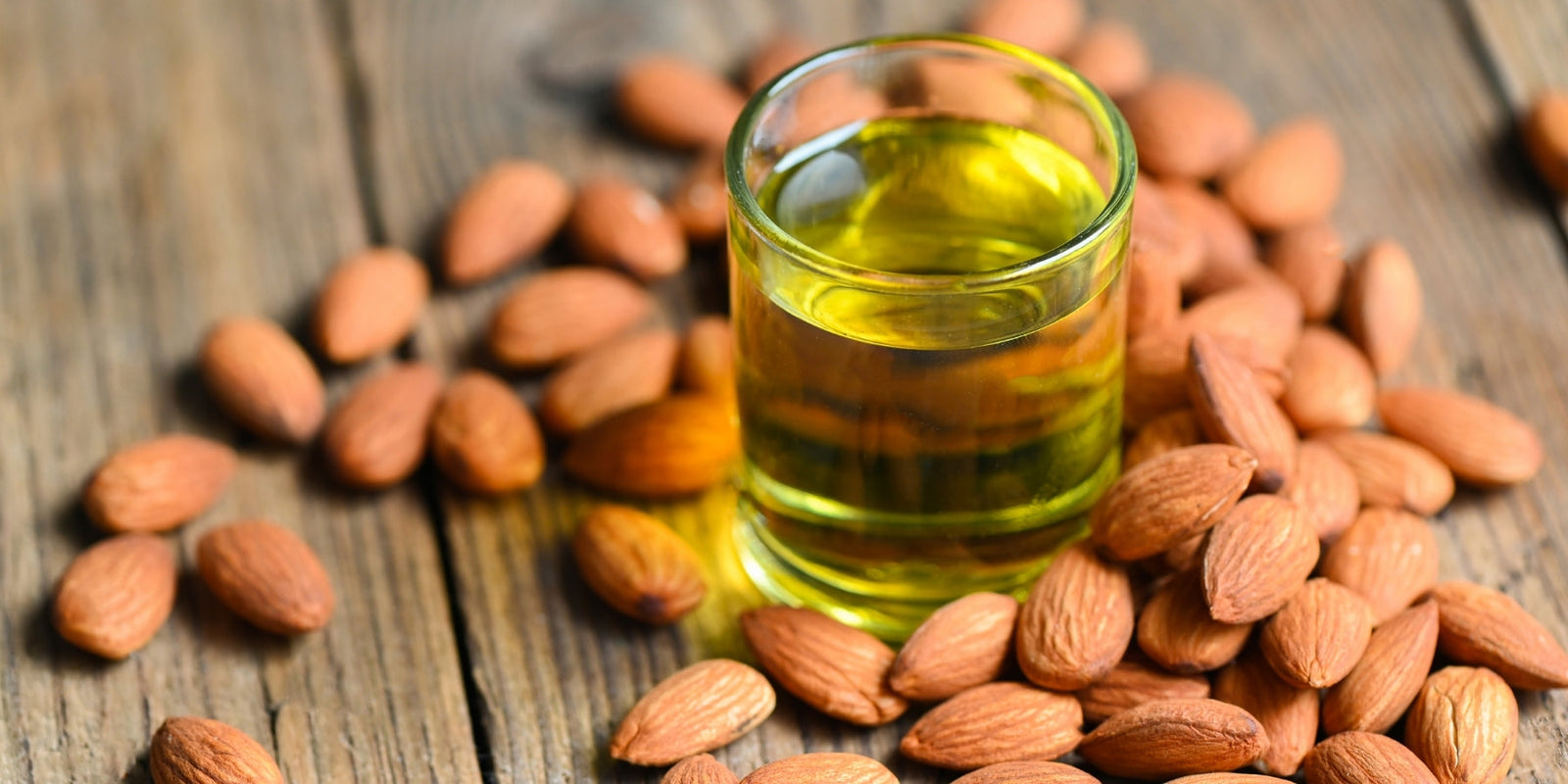
Sweet almond oil is cold-pressed from the kernels of Prunus dulcis, the same exact almonds you eat. (Bitter almond oil is a different product and is never used on the face.) Chemically it is a triglyceride oil dominated by oleic acid, roughly 60 to 70 percent, with linoleic acid around 20 to 30 percent, plus vitamin E, phytosterols, and squalene (pharmaceutical review; International Journal of Cosmetic Science review).
That oleic-heavy profile is the key to everything else. Oleic-rich oils feel softer and richer on skin and sit on the surface longer; linoleic-rich oils, like rosehip, feel drier and thinner. A research review of plant oils in skin care notes that almond oil, like jojoba, largely stays in the upper layers of skin, which is what you want from a moisturizing oil: a soft, breathable layer that slows water loss (Lin, Zhong and Santiago, 2018).
What it does in a face oil
Three things, all about feel rather than treatment:
- Slip and cushion. Almond oil spreads easily and gives a blend the glide that lets you press it in without tugging. In Bloom it is the reason the oil feels like a facial oil and not like a serum.
- Softness on dry patches. The oleic acid is the part dry and mature skin tends to appreciate; it is why almond oil has been a massage and body oil for so long. In comparison studies on dry skin, both sweet almond and jojoba oils performed comparably to petrolatum as moisturizers (Wiley review).
- A stable middle. It is more oxidation-resistant than rosehip and richer than jojoba, so it balances the texture of the two oils around it.
The limitation: it rates a 2
Sweet almond oil has a comedogenic rating of 2 on the 0-to-5 scale, which Typology describes as moderately comedogenic: fine for most skin, but applied neat it can contribute to congestion in oily or breakout-prone skin. NBC Select’s expert guide groups it with the heavier oils for exactly that reason, next to jojoba (2) and rosehip (1).
We won’t pretend otherwise, and it is why almond oil is third on Bloom’s label rather than first. In a blend led by jojoba and rosehip, it adds richness without being the base. If your skin congests easily, that proportion matters; so does patch-testing, which is covered in our guide to choosing a CBD face oil for acne-prone skin.
Pro Tip:
Lindsey, Sow Eden's co-founder, highly recommends to add a few drops of the Bloom facial oil into your favorite moisturizer. This increases its moisturizing power and also adds inflammation reducing properties to your beauty and skincare routine. Plus, it stretches your Bloom facial oil so that the bottle will last you much longer, rather than blowing through it quickly!
Our safety note: it is a tree nut
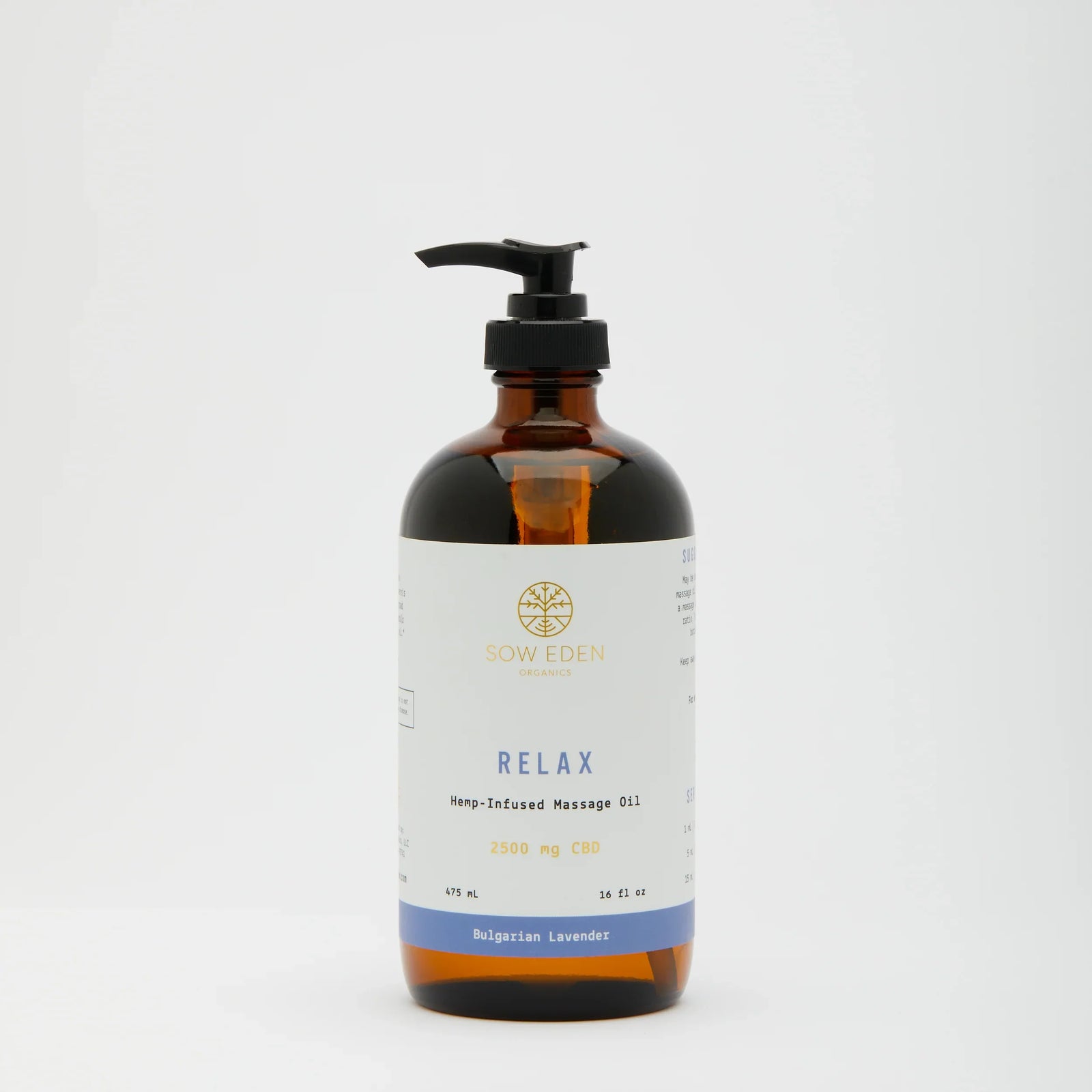
This is the part we want to be unmistakable about. Almond is a tree nut, and almond oil can trigger a reaction in people with tree-nut allergies, including through skin contact (Verywell Health; Medical News Today). If you have a tree-nut allergy, do not use Bloom Facial Oil or any other product containing almond oil unless your allergist has told you it is appropriate. Our Unscented Relax body oil (MCT, jojoba, hemp extract) contains no nut-derived ingredients and is the alternative we point to.
Medical News Today also notes that people with eczema are more likely to have allergies in general and should be more careful trialing almond oil. For everyone else, the standard patch test applies: a small amount on the inner forearm, 24 to 48 hours, and stop if you see redness, itching, or swelling.
Where it sits in Bloom
Bloom’s label, in order by weight: jojoba oil, rosehip oil, sweet almond oil, broad-spectrum hemp-derived CBD oil, geranium essential oil, all organic.
Read as a recipe: jojoba for stability and sebum-likeness, rosehip for linoleic acid and a dry finish, almond for softness and glide, broad-spectrum CBD extract that tests non-detect for THC on the certificate of analysis we publish, and a trace of rose geranium for scent. Almond is the ingredient that keeps the blend from feeling austere.
How to use Bloom
- Apply to a clean, dry face, up to twice daily. A few drops to a quarter dropper (0.25 mL).
- If your skin is on the oilier side, mix two or three drops into your moisturizer rather than applying neat, and keep it off the T-zone at first.
- If your skin is dry, press it over moisturizer at night so the oil seals in what the cream delivers.
- It doubles as a cuticle oil and an after-waxing oil, both jobs almond oil has done for generations.
What customers say
Verified reviews, quoted as written:
“Feels great on my skin. I put a few drops in my moisturizer 2x a day. Highly recommend.” Charlene M., 5 stars
“I love this facial oil! I use it every night. It’s nice & light, and smells wonderful.” Cami F., 5 stars
“This product smells and feels wonderful on my skin. I use it with my regular facial cream every night.” Leonarda S., 5 stars
Frequently asked questions
Is sweet almond oil good for the face?
For normal, dry, and combination skin, yes: it is a soft, well-tolerated emollient. For very oily or congestion-prone skin, use it blended and in small amounts, or choose a lighter oil.
Does sweet almond oil clog pores?
It rates a 2 of 5, so it can in some people, mainly when used neat on oily skin. In a blend where it is the third ingredient, the risk is lower, but patch-test.
Can I use Bloom if I have a nut allergy?
No, not unless your allergist has specifically cleared almond oil for you. Choose our nut-free Unscented Relax body oil instead.
What is the difference between sweet and bitter almond oil?
Sweet almond oil is the cosmetic oil pressed from edible almonds. Bitter almond oil comes from a different variety and is not used on skin.
Does Bloom contain THC?
No. The broad-spectrum CBD extract in Bloom tests non-detect for THC; the batch report is on our Lab Results page.
Explore the full organic, vegan CBD skincare collection, or go straight to Bloom Facial Oil.
About the author
Jacob Dunn is the CEO of Sow Eden Organics. With a background in holistic wellness and sustainable agriculture, he has guided Sow Eden’s focus on organic, vegan, broad-spectrum CBD products that are independently lab tested batch by batch, with results published on the Lab Results page.
This article is for general information and is not medical advice. Sow Eden products are cosmetics and are not intended to diagnose, treat, cure, or prevent any disease. If you have a tree-nut allergy, do not use products containing almond oil unless your clinician says it is appropriate for you.