
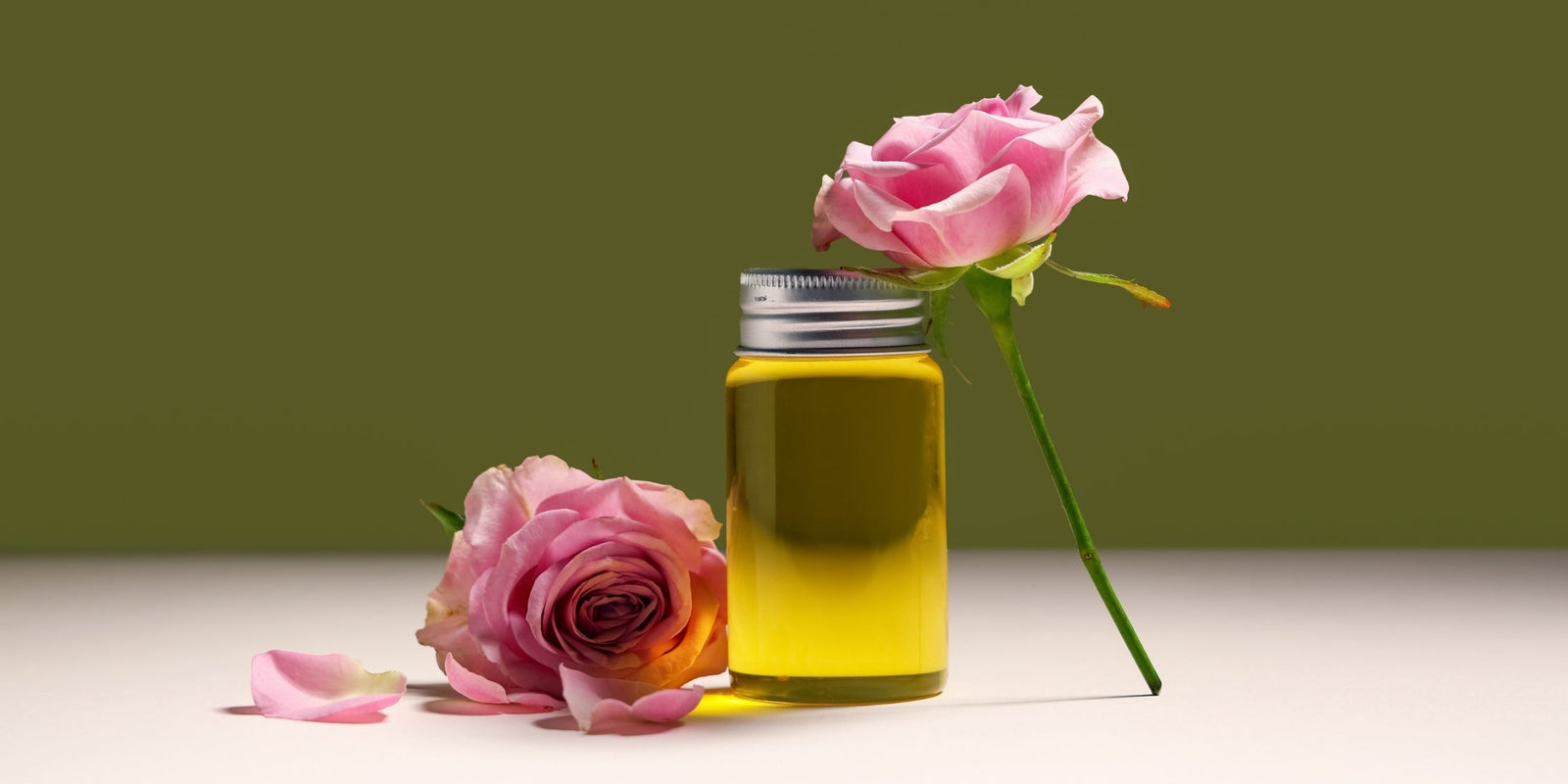

Ask ten people what “rose geranium oil” is and the majority will guess it's from rose petals. It’s not. Rose geranium essential oil is steam-distilled from the leaves of Pelargonium graveolens, a scented-leaf plant that isn’t a true geranium either. It earns the “rose” in its name from two aroma "terpene" molecules, citronellol and geraniol, that it shares with real rose oil, which is why perfumers have used it for more than a century as the affordable rose note.
It’s also the ingredient that comes up most often in reviews of Bloom Facial Oil: a third of them mention the scent, usually as “it smells like roses.” So here is the honest version: what rose geranium is, what it does and doesn’t do, who should patch-test before using it, and why it’s the last ingredient on Bloom’s label on purpose.
Rose geranium vs. rose otto vs. rosehip
Three “rose” ingredients show up in natural skincare, and they do completely different jobs. Bloom contains two of them.
| Ingredient | Plant and part | Role in a face oil | In Sow Eden |
|---|---|---|---|
| Rose geranium essential oil | Pelargonium graveolens, leaves (steam distilled) | Scent and skin feel; used at a small percentage | Bloom Facial Oil (last ingredient) |
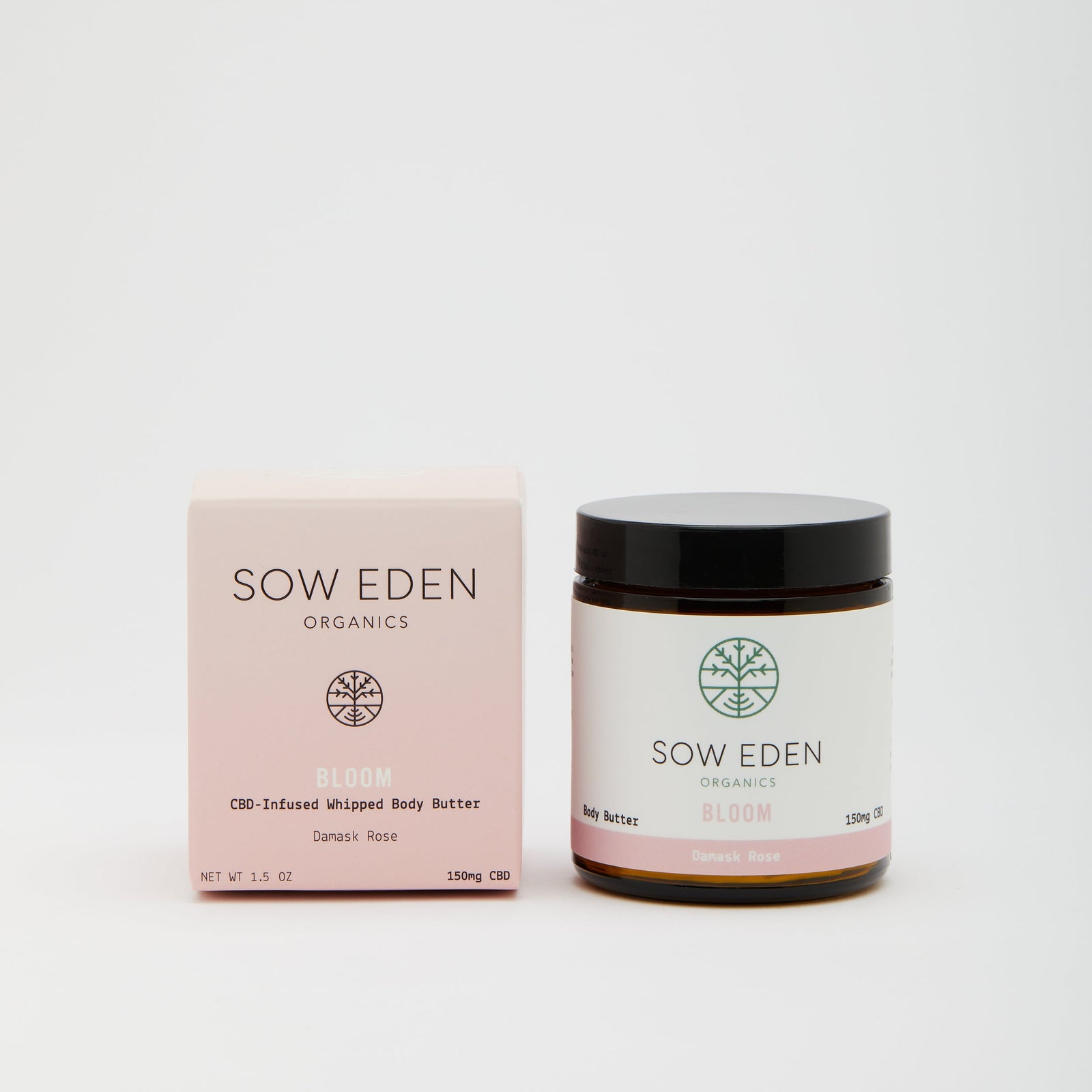
| Rose otto essential oil | Rosa damascena, petals (steam distilled) | True rose scent; one of the costliest essential oils | Bloom Whipped Body Butter |
| Rosehip seed oil | Rosa canina, seeds (cold pressed) | A carrier oil, not a fragrance; rich in linoleic acid and used as the bulk of a formula | Bloom Facial Oil (second ingredient) |
So when a review says Bloom “smells like roses,” that’s the rose geranium. When we talk about what the oil does for skin texture, that’s mostly the rosehip, jojoba, and sweet almond underneath it, the three carrier oils we have blended together to create our famous facial oil.
What the research says, and what it doesn’t
Rose geranium oil has been studied more than most essential oils. Healthline’s summary points to a 2017 review describing antioxidant and antimicrobial activity in laboratory settings, and L’Oréal’s ingredient library notes that the astringent and antioxidant constituents are part of why it is used in skincare formulas.
Two honest caveats. First, lab activity isn’t the same as a result you should expect from a few drops of a diluted face oil; even Typology’s ingredient profile says the idea that rose geranium regulates sebum “still needs to be confirmed by clinical studies.” Second, we are a wellness and skincare company, not a clinic. We won’t tell you rose geranium treats acne, eczema, or anything else, because the evidence isn’t there and it wouldn’t be an appropriate claim for a cosmetic. What we can say: it gives Bloom a floral, rose-like scent that most reviewers describe as light and pleasant (a few find it distinctly rosy), and it is used at a small enough level that the oil reads as scented rather than perfumed.
Who it suits, and who should skip it
A good fit: normal, combination, and oily-leaning skin that tolerates scented products, and anyone who wants a face oil that doubles as a small sensory ritual. Bloom’s base of jojoba and rosehip is the reason it suits combination skin; our guide to choosing a CBD face oil for acne-prone skin explains why those two carriers matter more than the CBD percentage.
Patch-test first, or choose unscented:
- Fragrance-sensitive skin. Citronellol, geraniol, and linalool, the molecules that make rose geranium smell like rose, are on the FDA’s list of recognized fragrance allergens and must be declared individually on labels in the EU above very low thresholds. Natural doesn’t mean non-allergenic.
- Anyone told to avoid fragrance by a clinician, including during cancer treatment, with eczema-prone skin, or after procedures. In those cases choose a fragrance-free product; our Unscented Relax body oil is the one we point to.
- Currently reactive skin, if products that used to be fine now sting or flush. Wait until it settles.
- The eye area. Keep any essential-oil product away from the eye contour and broken skin.
WebMD summarizes it well: rose geranium oil is “possibly safe” on skin for short-term use and usually well tolerated, but people with sensitive skin might develop a rash. A 24- to 48-hour patch test on the inner forearm answers the question for your skin specifically.
Why it’s the last ingredient in Bloom
Here is Bloom’s full ingredient list, as printed on the bottle: Simmondsia chinensis (jojoba) oil, Rosa canina (rosehip) oil, Prunus dulcis (sweet almond) oil, broad-spectrum hemp-derived CBD oil, Pelargonium graveolens (geranium) essential oil. All organic.
Ingredient lists run in descending order by weight, so rose geranium being last tells you it’s the smallest component. That’s deliberate. Essential oils belong in a face oil at a low percentage, as a finishing note, not as the active base. The heavy lifting is done by jojoba (close in structure to skin’s own sebum), rosehip (high in linoleic acid), and sweet almond, with broad-spectrum CBD extract that tests non-detect for THC on the certificate of analysis we publish.
If you’ve tried other rose-scented face oils and found them heavy or perfumed, that proportion is usually the difference.
How to use it
- Apply to a clean, dry face, up to twice daily. A few drops to a quarter dropper (0.25 mL) is plenty; pressed in over moisturizer, or a few drops mixed into a moisturizer at night, is how most customers use it.
- Used as directed, one 15 mL bottle lasts roughly 60 to 90 days.
- It also works as a makeup primer, an oil cleanser, a cuticle oil, and an after-waxing oil.
- New to face oils? Patch-test on the inner forearm first, then start with every other night.
What customers say about the scent
Verified reviews, quoted as written:
“Very pleasant scent, not overpowering at all. I like that the oil blends very well with my moisturizer.” Maria R., 5 stars
“The scent is light and pleasant and the oil absorbs beautifully into my skin without leaving it sticky.” Christine L., 5 stars
“This is a magical facial oil, and the only thing I use on my 72 year old face. It smells exquisite and lasts ages.” Therese O., 5 stars
Frequently asked questions
Is rose geranium oil the same as rose oil?
No. Rose geranium comes from the leaves of a Pelargonium; rose otto comes from the petals of Rosa damascena. They share scent molecules, which is why they smell related, but they are different plants from different families.
Is rose geranium oil safe for sensitive skin?
It’s usually well-tolerated, but its main scent compounds are recognized fragrance allergens. If your skin is sensitive or reactive, patch-test for 24 to 48 hours first, or choose a fragrance-free product instead.
How strong is the scent in Bloom?
Most reviewers describe it as light and pleasant, and it fades after application. A few find it distinctly rosy, so if you dislike rose scents, choose our unscented body oil instead.
Can I use Bloom if I’m breakout-prone?
Many customers with combination skin do, and the jojoba-and-rosehip base is the reason. Read what to look for in a CBD face oil for acne-prone skin first, and patch-test like you would with any new oil.
Does Bloom contain THC?
No. The broad-spectrum CBD extract in Bloom tests non-detect for THC; the batch report is on our Lab Results page.
Explore the full organic, vegan CBD skincare collection, or go straight to Bloom Facial Oil.
Pro Tip
Lindsey, Sow Eden's co-founder, highly recommends using the Bloom facial oil with rose geranium post micro-needling and hair waxing. The combination of carrier oils, broad spectrum CBD extract, and rose geranium help to soothe irritated and inflamed skin. Give it a try and you'll see how amazing the Bloom facial oil really is!
About the author
Jacob Dunn is the CEO of Sow Eden Organics. With a background in holistic wellness and sustainable agriculture, he has guided Sow Eden’s focus on organic, vegan, broad-spectrum CBD products that are independently lab tested batch by batch, with results published on the Lab Results page.
This article is for general information and is not medical advice. Sow Eden products are cosmetics and are not intended to diagnose, treat, cure, or prevent any disease. If you have a diagnosed skin condition, talk with a board-certified dermatologist before adding a new product.