

Rosehip seed oil has a reputation problem, and it’s the opposite of the usual one: it is over-praised for the wrong reasons. Most articles credit it with vitamin C and call it “natural retinol.” Neither holds up well. The real reason it belongs in a face oil is less glamorous and more useful: its fatty-acid profile.
Rosehip seed oil is the second ingredient in Bloom Facial Oil, after jojoba. This is the honest account of what it is, what it isn’t, who it suits, and how to keep it from going off.
What rosehip seed oil actually is
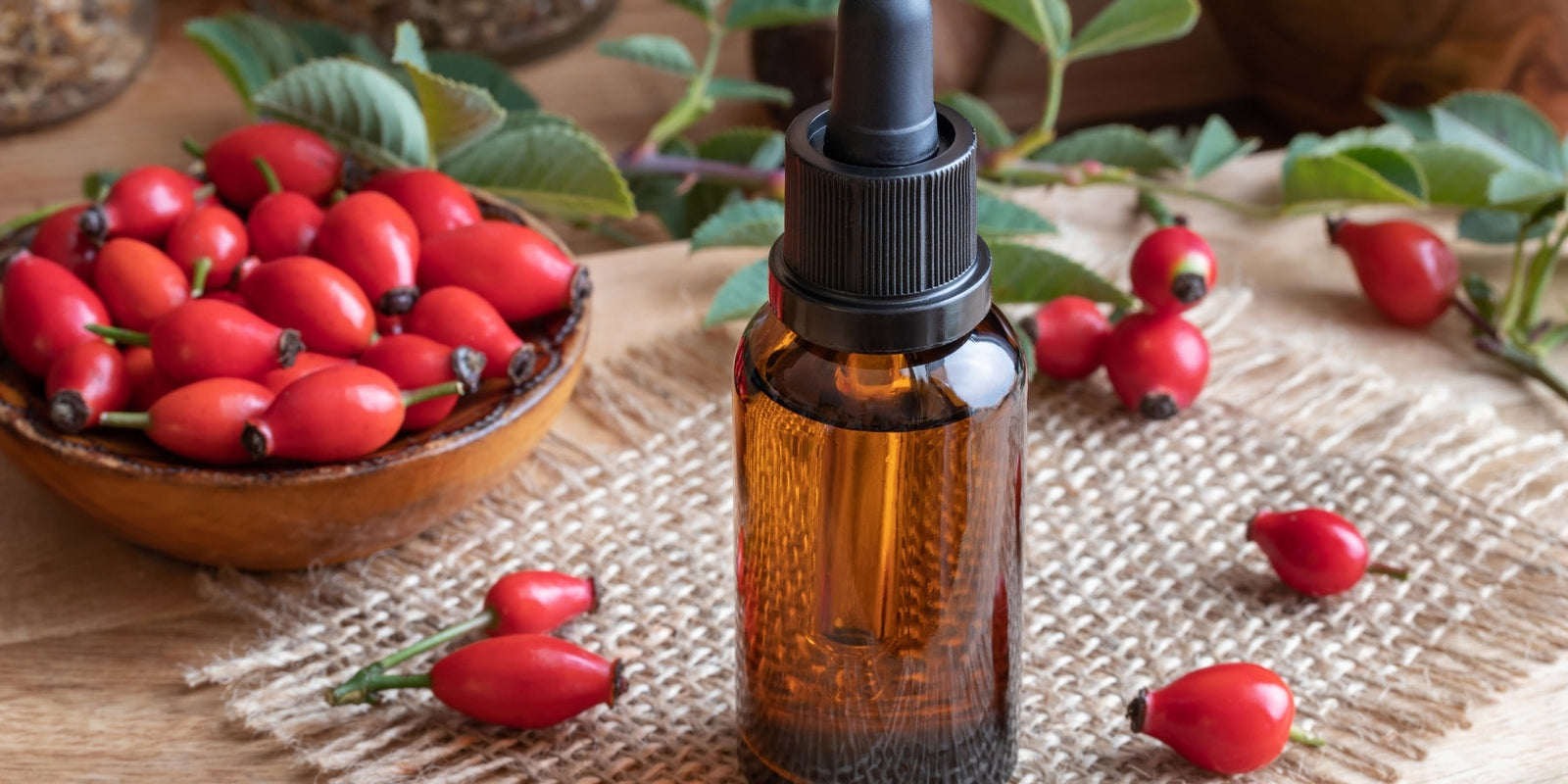
The oil is cold-pressed from the seeds inside the fruit of wild roses, most often Rosa canina, the dog rose. (Bloom’s label lists it as Rosa canina oil.) It is not an essential oil and it is not a fragrance. It is a carrier oil: the bulk, nourishing part of a formula, the way olive oil is the bulk of a vinaigrette.
What’s in it is well characterized. Published analyses of Rosa canina seed oil put linoleic acid at roughly 50to 55 percent, with alpha-linolenic acid near 20 percent and oleic acid around 15 to 20 percent (Food Properties journal; NIH-indexed review). Alongside the fatty acids come smaller amounts of tocopherols (vitamin E), carotenoids, phytosterols, and squalene. Together those account for the amber color and the dry, fast-absorbing feel.
Two myths worth clearing up
“Rosehip oil is rich in vitamin C.” Rosehip fruit is famously high in vitamin C. The seed oil is not. Vitamin C is water-soluble and does not carry over into a pressed oil in meaningful amounts; what the oil holds are the lipid-soluble antioxidants, carotenoids and tocopherols (ingredient reference). If you want vitamin C, use a vitamin C serum. A rosehip oil is doing a different job.
“Rosehip oil is natural retinol.” Some cold-pressed rosehip seed oils contain trace trans-retinoic acid, but the concentrations are far too low to deliver anything like the effect of a formulated retinoid (DermApproved). It is a pleasant fact about the oil, not a reason to buy it, and we don’t sell Bloom on it.
The reason that matters is that when a brand oversells rosehip, customers expect retinoid results from a face oil and are disappointed. When you know what it actually does, it earns its place.
Why linoleic acid is the point
Oils differ mainly in their balance of linoleic acid (lighter, drier feel) and oleic acid (richer, heavier feel). Rosehip sits firmly on the linoleic side. That has two practical consequences:
- Texture. Linoleic-dominant oils feel thin and absorb quickly, which is why rosehip-based face oils rarely feel greasy and layer well under moisturizer or makeup.
- Fit for combination skin. Dermatologists quoted in Vogue note that rosehip has a low comedogenic rating, typically 0 to 2, and that because blemish-prone skin tends to have lower linoleic acid in its sebum, linoleic-rich oils may be better tolerated than heavier, oleic-dominant ones. NBC Select’s expert guide lists rosehip at 1 on the 0-to-5 comedogenic scale.
Those are statements about feel and tolerability, not treatment. If you are breakout-prone, read our guide to choosing a CBD face oil for acne-prone skin before you buy anything; it explains why the carrier oils matter more than the CBD percentage, and how to patch-test.
The catch: Rose hiip goes rancid faster
The same polyunsaturated fats that make rosehip light also make it the least stable common face oil. A 2018 study of Rosa canina seed oil found rapid deterioration under UV light and recommended keeping it away from light and temperatures above 30 °C (Grasas y Aceites). Firstly, that's why Jacob and Lindsey, Sow Eden co-founders, thought to put Bloom facial oil in dark amber glass bottles. Plus, CBD is an incredibly strong anti-oxidant, a natural preservative of sorts. But here are a few habits to keep it fresh so your skin stays soft, supple, and nourished:
- Keep the bottle capped so it is not constantly exposed to oxygen and air exchange.
- Keep the bottle out of the bathroom window, and away from the shower’s heat.
- Use it within the expected life of the bottle rather than stockpiling. A 15 mL bottle of Bloom used as directed lasts about 60 to 90 days, which is well inside that window.
Rosehip in Bloom: why it’s second, not first
Bloom’s label, in order: jojoba oil, rosehip oil, sweet almond oil, broad-spectrum hemp-derived CBD oil, geranium essential oil, all organic. Ingredient lists run by weight, so rosehip is the second-largest component.
The order is deliberate. Jojoba leads for stability and because it is structurally close to skin’s own sebum. Rosehip follows for the linoleic acid and the dry finish. Sweet almond rounds out the texture. The broad-spectrum CBD extract tests non-detect for THC on the certificate of analysis we publish. And the rose geranium at the end is the scent, used at the smallest proportion. If you have used a pure rosehip oil and found it too thin, or one that turned on you in a month, the blend is the answer to both.
How to use a rosehip-based face oil
- Apply to a clean, dry face, up to twice daily. A few drops to a quarter dropper (0.25 mL) is plenty.
- Press, don’t rub, over moisturizer at night; or mix two or three drops into your moisturizer in the morning.
- It layers under makeup; many customers use Bloom as a primer.
- New to face oils? Patch-test on the inner forearm for 24 to 48 hours, then start every other night.
What customers say about the texture
Verified reviews, quoted as written:
“Great product. Absorbs quickly leaves my skin soft and hydrated great scent!” Stephanie S., 5 stars
“I use about 3 drops in the evening right after washing my face. It goes on incredibly smooth, smells great, absorbs well.” Kianna S., 5 stars
“I absolutely love this product, it’s not oily but is easily absorbed.” Laura F., 5 stars
Frequently asked questions
Is rosehip oil the same as rose oil?
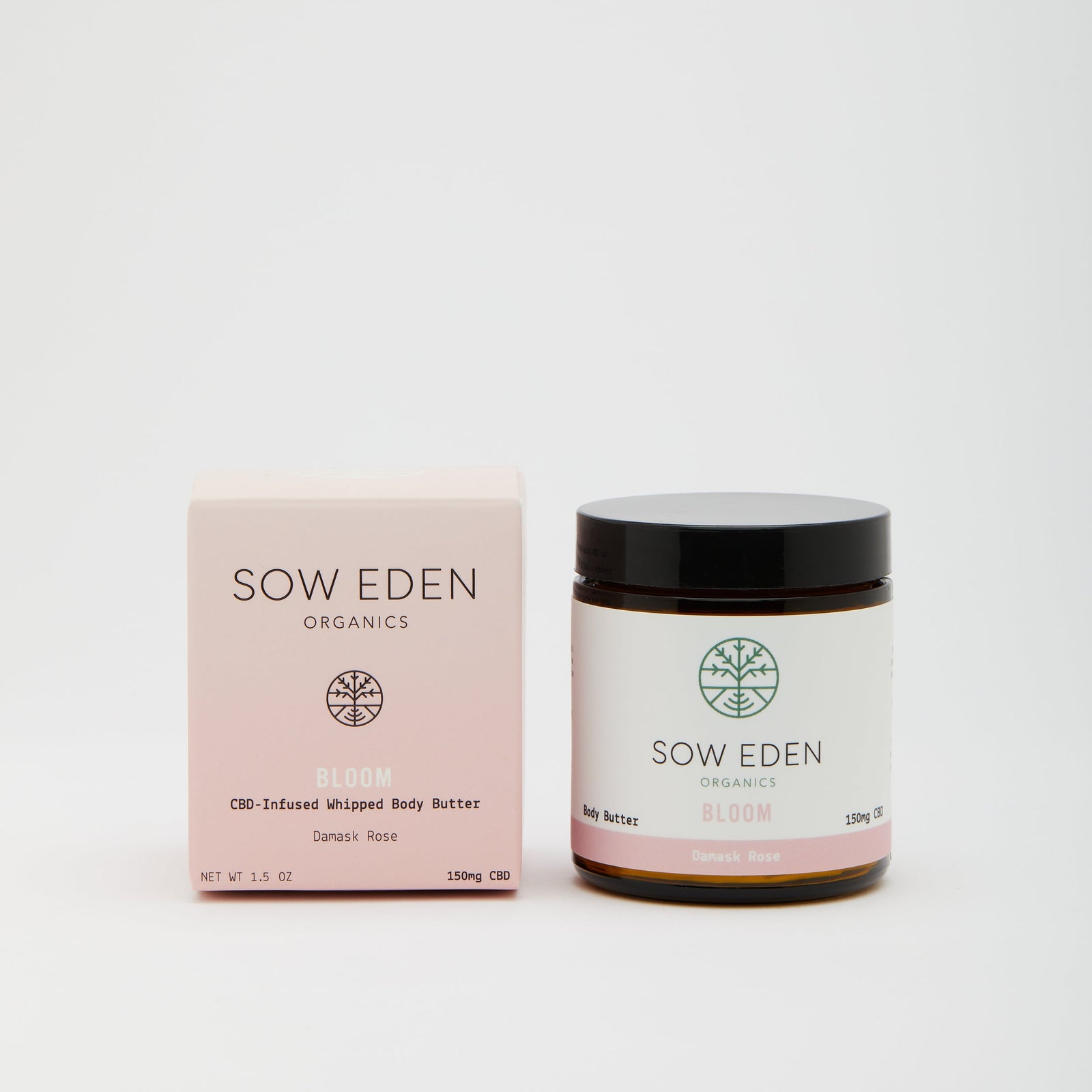
No. Rose oil (rose otto) is an essential oil distilled from Rosa damascena petals and is used for scent. Rosehip oil is pressed from rose seeds, has little scent, and is used as the body of a formula. Our Bloom Whipped Body Butter is scented with rose otto; Bloom Facial Oil is built on rosehip.
Does rosehip oil clog pores?
It is rated low on the comedogenic scale (about 1 of 5) and is linoleic-rich, which is why it tends to suit combination skin. Individual skin varies, so patch-test.
Is rosehip oil good for dry skin?
Yes, as an occlusive layer over moisturizer. On very dry skin, apply it over a cream rather than instead of one, so the oil seals in water the cream delivers.
Why is my rosehip oil cloudy or smelly?
Cold can cloud it harmlessly; warm the bottle in your hands. A sharp, crayon-like smell means it has oxidized and should be replaced.
Does Bloom contain THC?
No. The broad-spectrum CBD extract in Bloom tests non-detect for THC; the batch report is on our Lab Results page.
Explore the full organic, vegan CBD skincare collection, or go straight to Bloom Facial Oil.
About the author
Jacob Dunn is the CEO of Sow Eden Organics. With a background in holistic wellness and sustainable agriculture, he has guided Sow Eden’s focus on organic, vegan, broad-spectrum CBD products that are independently lab tested batch by batch, with results published on the Lab Results page.
This article is for general information and is not medical advice. Sow Eden products are cosmetics and are not intended to diagnose, treat, cure, or prevent any disease. If you have persistent acne, scarring, or a diagnosed skin condition, see a board-certified dermatologist.