

The short answer is the one you've probably already heard: ask your oncology team first. The longer answer is why that conversation matters more for some CBD products than others, and how to make it a productive five minutes rather than an awkward one.
Oral CBD and topical CBD are different questions
Most of the caution around CBD during cancer treatment is about ingested CBD. The National Cancer Institute notes that CBD can inhibit certain liver enzymes (the cytochrome P450 family) that also process many chemotherapy drugs (the same interaction and blackbox warning about consuming grapefruit), so concentrated oral CBD could in theory change how much of a drug stays in your system. It affects the bio-availability of some drugs. That is a real reason oncologists want to know about tinctures and gummies.
Topicals are a different route. Clinician-reviewed guidance from Healthline notes that topical CBD is absorbed locally and does not reach the bloodstream in significant amounts, which may make drug interactions less likely. A Mayo Clinic pilot study that applied a CBD cream to the hands and feet of 40 people with chemotherapy-related neuropathy found it did not improve their symptoms, but it also found the cream was well tolerated with no side effects attributed to it. But maybe the problem with this is that Mayo Clinic didn't use Sow Eden's CBD topicals, which are a level beyond many other existing products out there. We personally have testimonials from customers attesting that our Calm Body Butter has helped them with neuropathy and nerve pain.
Why we still say "ask"
Three reasons that have nothing to do with CBD itself:
- Radiation fields. Many radiation teams ask you not to apply anything to the treated area within a window before each session, and to use only what they've approved. A plant oil is still "something."
- Broken skin. If skin is cracked, open, or infected, your team may want nothing on it but what they prescribe.
- Other ingredients. Essential oils, nut-derived oils (sweet almond is one), and fragrance might all matter just as much as the CBD.
Questions to bring to your appointment
Screenshot this list.
- "I'd like to use a fragrance-free body oil for dryness. Is there any area I should keep it away from?"
- "Does it matter to you whether a topical contains CBD? Here's the lab report." (Bring the certificate of analysis from our Lab Results page. It shows non-detect THC and the full cannabinoid panel.)
- "The ingredients are MCT oil, jojoba oil, and hemp extract. Anything there you'd want me to avoid?"
- "Should I stop using it if my skin peels or blisters, and who do I call if that happens?"
- "Is there a point in my treatment when you'd prefer I pause all non-prescribed skin products?"
Write the answers down. Teams change, and your future self will want them.
If your team says yes
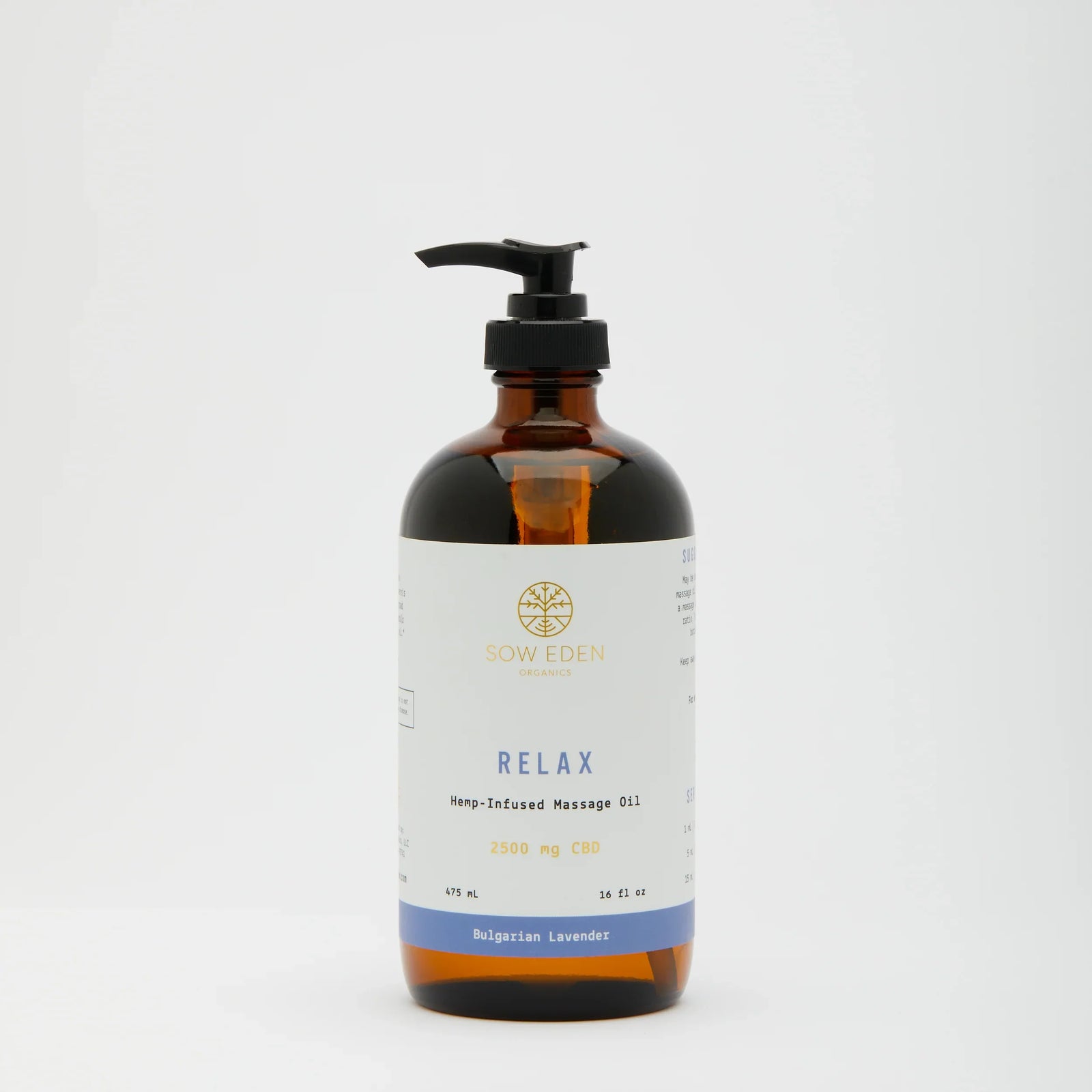
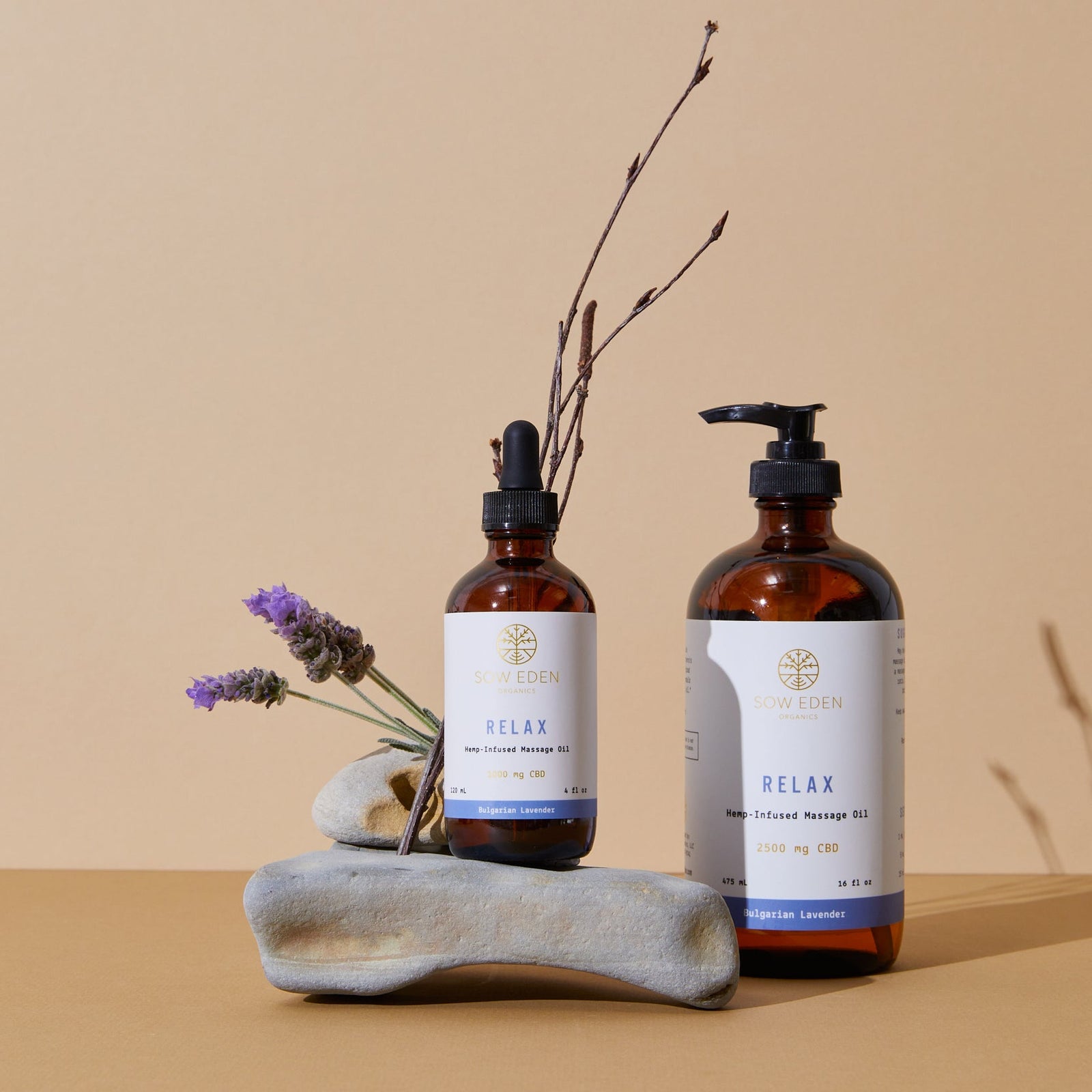
Start with the simplest option. Our Relax Massage & Body Oil in Unscented has three ingredients and no essential oils, which is why it's the one we suggest for this conversation. Patch-test a small area for a day or two before using it more widely, apply to damp skin, and keep using whatever cream your team approved underneath it. Our roller is also zero-THC, but its eucalyptus and peppermint oils make it a better fit for muscle tension well after treatment than for treatment-stressed skin.
If your team says "not now," our gentle skin-care routine for chemotherapy works just as well with any fragrance-free cream they prefer, and our fragrance-free body oil guide covers how to patch-test when you're ready.
About the author
Jacob Dunn is the CEO of Sow Eden Organics. With a background in holistic wellness and sustainable agriculture, he has guided Sow Eden’s focus on organic, vegan, broad-spectrum CBD products that are independently lab tested batch by batch, with results published on the Lab Results page.
This article is for general information and is not medical advice. Sow Eden products are cosmetics and are not intended to diagnose, treat, cure, or prevent any disease. Talk with your oncology team before changing your skin-care routine during treatment.