

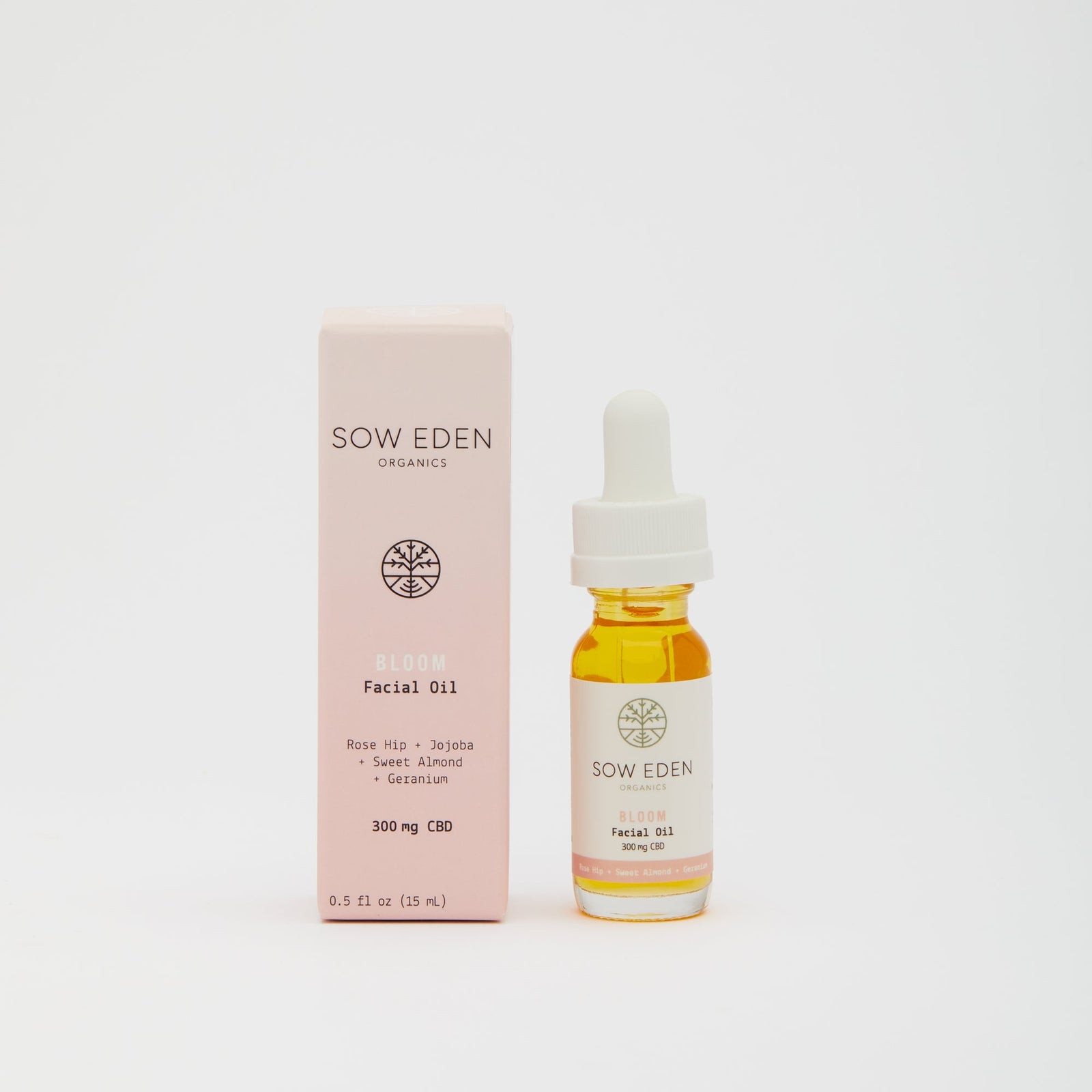

If you've typed "best CBD face oil for acne" into Google, you've probably noticed two things: most roundups are written by people who've never used the products, and almost none of them tell you which oils in the bottle actually matter for skin that breaks out. This guide fixes that. It covers how to read a face-oil ingredient list, which carrier oils may suit acne-prone skin, and, because we make one, an honest look at whether our own Bloom Facial Oil is the right fit for you.
One thing up front: a face oil is not an acne treatment. The American Academy of Dermatology points people with acne toward products labeled non-comedogenic or "won't clog pores," and dermatologists have far stronger evidence for retinoids, benzoyl peroxide, salicylic acid, and azelaic acid than for any oil. A well-chosen oil is a moisturizer that works alongside that routine, not a replacement for it.
The carrier oil matters more than the CBD
In any CBD facial oil, CBD is a minority ingredient. Most of the bottle is carrier oil, and that's what your pores experience. So start there.
Carrier oils are rated on a 0 to 5 comedogenic scale (how likely they are to clog pores). For acne-prone skin, dermatologists suggest staying at 2 or below and favoring oils that are high in linoleic acid, because the sebum of acne-prone skin tends to be low in linoleic acid and high in oleic acid, a combination that may make it thicker and more likely to clog.
| Oil | What it is | Comedogenic rating | Who it may suit |
|---|---|---|---|
| Jojoba | A liquid wax ester, not a true oil; structurally close to human sebum | 0 to 2 (widely called non-comedogenic) | Oily, combination, and acne-prone skin |
| Rosehip seed | Pressed seed oil, roughly 45 to 55% linoleic acid | 1 to 2 | Combination skin that breaks out occasionally; dull or uneven-looking skin |
| Sweet almond | Oleic-dominant nut oil | 2 | Normal to dry skin; very congestion-prone skin should patch-test |
| Coconut | Lauric-acid oil | 4 to 5 | Not for acne-prone faces |
| Hemp seed | Linoleic-rich (not the same as CBD) | 0 | Oily and acne-prone |
Sources: dermatologists quoted in Allure and Byrdie on jojoba; Healthline on rosehip's linoleic acid; Typology and ingredient databases on sweet almond's rating of 2.
What to look for on the label
- Jojoba or squalane near the top of the list. These are the two lightest, most stable options for breakout-prone skin.
- A linoleic-rich seed oil (rosehip, hemp seed, evening primrose) rather than oleic-heavy oils (coconut, olive, avocado, macadamia) as the main body of the formula.
- A short ingredient list. Fewer ingredients, fewer variables when something reacts.
- Essential oils disclosed by name. Geranium, lavender, and tea tree are common. They give the oil its scent; if your skin is currently reactive, look for fragrance-free or patch-test first.
- A current certificate of analysis showing cannabinoid content and THC status. If a brand can't show you one, that tells you something.
- Broad-spectrum or isolate CBD if you want zero THC. "Full-spectrum" means trace THC is present by definition. For a facial oil this is a preference, not a safety issue, but you should know which one you're buying.
Is Bloom right for acne-prone skin?
Here's the honest version.
What's in it: organic jojoba oil (first ingredient), organic rosehip oil, organic sweet almond oil, broad-spectrum hemp-derived CBD (300 mg per 15 mL bottle), and organic rose geranium essential oil. That's the whole list. It's THC-free: the certificate of analysis for every batch is on our Lab Results page, and Bloom's shows non-detect THC.
Why it may fit many acne-prone routines: the first two ingredients are exactly the two oils dermatologists name most often for breakout-prone skin. Jojoba sits closest to your own sebum and doesn't accumulate in pores the way heavier triglyceride oils can; rosehip brings the linoleic acid that acne-prone sebum tends to lack. Bloom is lightweight and sinks in quickly; most customers use two to four drops for the whole face.
Where to be careful: sweet almond oil is the third ingredient. At a rating of 2 it's fine for most skin, but if you clog very easily or deal with fungal acne, patch-test along the jawline for a week before committing. And rose geranium is a fragrance, even though it's a natural one. If your skin is inflamed right now, or a dermatologist has told you to go fragrance-free, Bloom isn't the right pick today; come back when your skin has calmed down.
Who we'd steer elsewhere: anyone with active, inflamed, moderate-to-severe acne. See a dermatologist first, treat the acne, then add an oil for comfort and moisture once things settle. We would rather you buy nothing from us than buy the wrong thing.
How to use a face oil on acne-prone skin
- Oil goes last at night. Cleanse, apply any treatment your dermatologist prescribed, moisturizer if you use one, then press 2 to 3 drops of oil over the top. Oil over moisturizer, not under.
- Start three nights a week. Increase if your skin stays clear.
- Daytime is optional. If you do use it in the morning, finish with SPF. Bloom also works as a primer under makeup.
- Patch-test anything new for 24 hours on the inner forearm or jawline.
- Stop if you get new clogged pores after two to three weeks. That's your skin's answer.
What Bloom customers say
Bloom holds a 4.99-star average across 75 verified reviews. A few from people with oily, sensitive, or combination skin, quoted as written:
"I have very oily skin and this does not affect it at all... I mix it in with my daily moisturizer and it keeps me looking healthy and glowing." Lorraine B., 5 stars
"The oil is not greasy at all, very light weight and the best part is the smell... I haven't used face lotion since I bought this oil." Adrienne C., 5 stars
"I have notoriously dry skin, and finding something that doesn't irritate my face is so hard. This facial oil is the first thing that helped restore and keep moisture." Aimi S., 5 stars
"It is very soothing and hydrating and only 2 or 3 drops does the job." Christine L., 5 stars
Frequently asked questions
Is CBD face oil good for acne-prone skin?
It depends almost entirely on the carrier oils, not the CBD. Oils built on jojoba, squalane, or linoleic-rich seed oils like rosehip are generally well tolerated by acne-prone skin; oils built on coconut or other oleic-heavy bases often aren't. A face oil is a moisturizer, not an acne treatment.
Does Bloom clog pores?
Its first two ingredients, jojoba and rosehip, are among the lowest-rated oils on the comedogenic scale. Sweet almond, the third ingredient, is rated 2 out of 5 and suits most skin; if you're very congestion-prone, patch-test first.
Does Bloom contain THC?
No. Bloom uses broad-spectrum CBD, and every batch is third-party tested with non-detect THC. You can read the certificate on our Lab Results page.
Can I use Bloom with retinol or acne treatments?
Many people do: treatment first, oil last, at night. Because routines and prescriptions vary, check with your dermatologist about layering with prescription products.
The short version
If your skin breaks out, read the carrier oils before you read the CBD milligrams. Look for jojoba or squalane first, a linoleic-rich seed oil second, a short ingredient list, and a current lab report. Bloom Facial Oil checks those boxes for most acne-prone and combination skin, with two honest caveats: it contains sweet almond oil and a natural geranium scent. To compare it with the rest of our THC-free skincare, or to learn how CBD topicals interact with skin in general, start with CBD Topicals & Your Skin and our full range of zero-THC topicals.
About the author
Jacob Dunn is the CEO of Sow Eden Organics. With a background in holistic wellness and sustainable agriculture, he has guided Sow Eden’s focus on organic, vegan, broad-spectrum CBD products that are independently lab tested batch by batch, with results published on the Lab Results page.
Sow Eden products are cosmetics and are not intended to diagnose, treat, cure, or prevent any disease. If you have persistent or severe acne, see a board-certified dermatologist.

